Klaviyo
AI B2C CRM
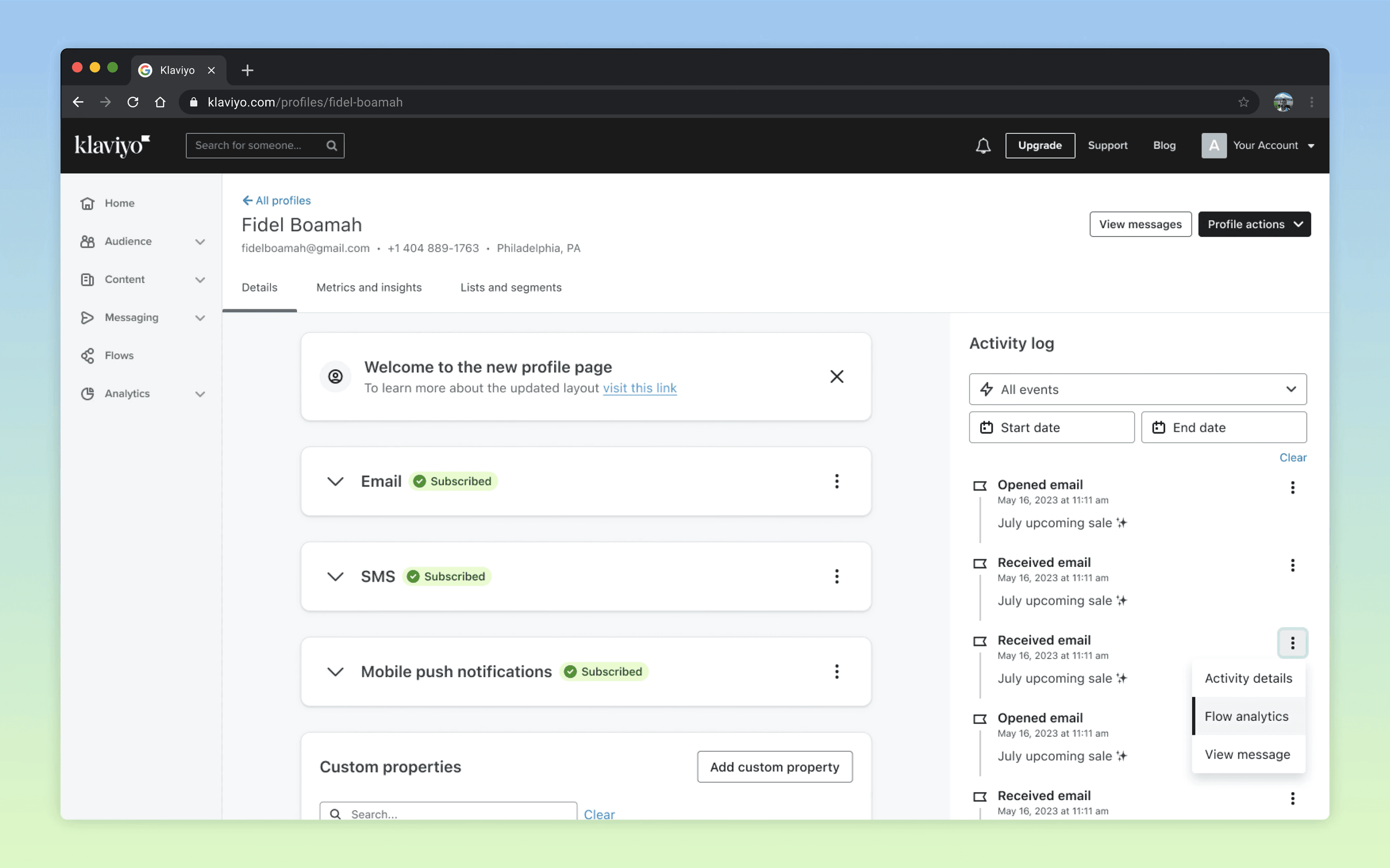
I led the redesign of Klaviyo's most legacy product area, Profiles. Inspired by the opportunity of a technical migration, I influenced a pivot from a mere 1:1 conversion of the profiles experience to a complete redesign, optimizing workflows and tools for troubleshooting. The work I did reduced support related tickets by 20% and introduced new components and patterns to the design system.
Role
Product Designer
Timeline
Jan - June 2023
The Context
Engineering initiated a technical migration from BackBone.js to React
In January 2023, engineering mandated a 1:1 Conversion of all product areas to React.
This Technical Migration was laying the ground work to stay compliant with international IPO standards around speed and language.
Legacy
Imagine a product area that hasn't
evolved since 2012
That was 'Profiles.' It served as the backbone of the platform, acting as the centralized repository for every data point a business held on their customers. Since this data is exactly what drives every marketing campaign and automation, the stakes were incredibly high. Yet, the area was riddled with broken paths and deprecated UI components. My goal was to untangle this legacy web to ensure this mission-critical data was actually accessible.
Speaking to users
I led a 3-week visions sprint, developing data driven ideas that aligned with marketers goals
This sprint revealed major usability gaps and explored feasible solutions to improve the existing profiles experience. It involved a full audit of the product area, 22 user interviews, and engineering consultations to validate technical constraints. We learnt who we needed to improve the experience for.
User Archetype
User Priorities
Search
Marketers need workflows that help access key profiles data
Understand
Marketers need a clear picture of customers relationship to the business
Business Case
Quantifying the Cost of Friction
I partnered with business analysts to quantify the operational drag caused by the 2012-era infrastructure. Our models revealed that stabilizing the platform's backbone and resolving these fractured workflows would unlock massive efficiency at scale.
Revenue Potential
In Operational Saving
Pivot
From Migration to Redesign
I showed leadership how unhelpful the profile experience they were demanding to migrate was. The turning point was (The main way I convinced them was by calculating the cost of support tickets related to the current interface. I showed that a redesign would reduce support volume by 20%, effectively paying for the extra design time within six months)
Old Profiles Experience
Profiles Home page

The homepage failed to account for multi-channel growth, causing billing confusion by displaying email counts while hiding SMS data. Additionally, the suppressed profiles count also served as a link to view all suppressions, most users missed this.
Furthermore, the absence of search functionality in the data table left users with no reliable way to find specific customers. The as pagination broke standard browser search behaviors.
Customer Profile page

Users were subjected to massive information overload without the tools to filter or search for relevance.
To make matters worse, poor information architecture buried 50% of key troubleshooting data, such as consent status, below the fold, adding significant friction to an already rigid experience.
Design Strategy & Priorities
Aligning Architecture with Marketer Intent
Recognizing that marketers investigate profiles to troubleshoot specific issues rather than browse lists, we prioritized a robust search experience.
Simultaneously, we restructured the data hierarchy to surface "high-priority" data (like consent and contact details) immediately, aligning the UI with the marketer’s mental model for rapid problem-solving.
Final Designs
Redesigned Dashboard experience
Profile count redesign

I addressed billing concerns around profile counts introducing a clear card layout with tool tips that explain what these counts represent. Additionally, I separated the suppressed profiles link from the counts avoiding any ambiguity.
Data table redesign

The data table component improved to include search and column filtering
This reduced the average number of clicks to access a profile from 7 to 3
Information architecture
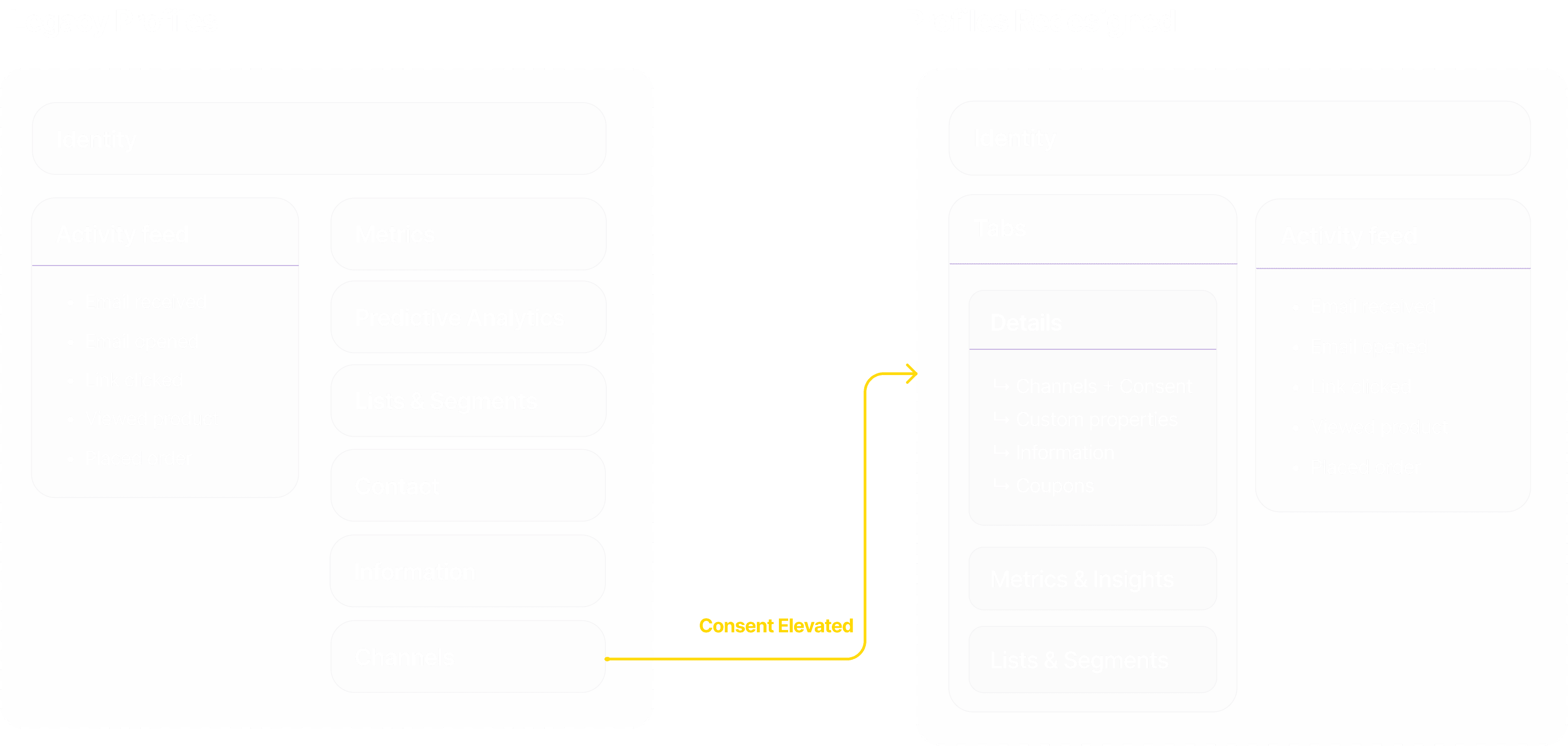
Before exploring layouts, I locked down the Information Architecture.
This structure allowed me to highlight critical workflows specifically elevating Consent. You can see here how I pulled that out of the bottom of the list and prioritized it in the new 'Details' hierarchy, ensuring users can immediately verify compliance status.
Troubleshooting flow for consent

User goal: Ability to act on insights immediately, speeding up workflows with AI generated content and emails.
Impact
We improved the profiles by aligning the experience with marketers mental models
Improving the search experience in the homepage and the information architecture on the customer page helped cut time-on-task down 31%. This also resulted in a 23% drop in profile related support tickets.
That meant fewer customer escalations for support teams, faster problem resolution for marketers, and higher trust in Klaviyo’s data ecosystem.